
Teaching Colour Without Worksheets: 7 Powerful Play-Based Ways Children Really Learn Colours.

In many classrooms, colour is introduced through flashcards, repetition, and worksheets.
But research and experience in play-based learning and Reggio-inspired education show something different:
Children don’t truly understand colour through memorisation.
They understand colour through experience, exploration, and interaction.
When we focus only on naming colours, we miss the deeper learning:
How colours change
How colours mix
How colours are affected by light and environment
This is why many educators are shifting toward teaching colours through play rather than instruction.
The Role of the Educator in Play-Based Colour Learning
In this approach, the educator is not the instructor, but the facilitator of learning.
Your role is to:
Prepare meaningful environments
Observe children’s thinking
Ask open-ended questions
Try asking:
“What do you notice?”
“What changed?”
“What do you think will happen next?”
These questions encourage deeper thinking and exploration.
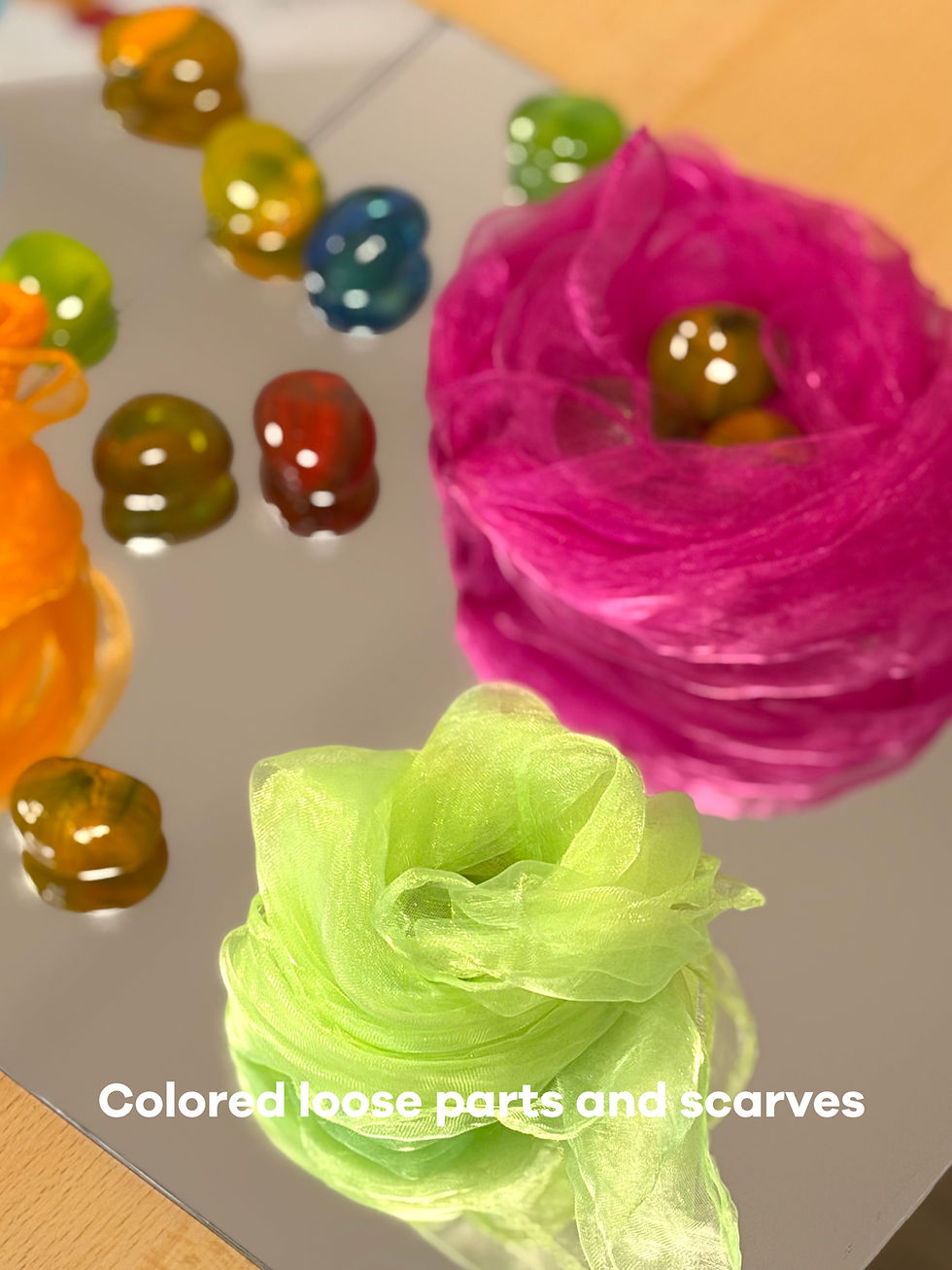
In a Reggio Emilia-inspired classroom, materials are not just tools—they are languages for thinking and expression. Therefore one of the most powerful way to teach children colours is through materials that speak.
Children build understanding when they:
Explore materials with their hands
Observe changes over time
Experiment freely without pressure
Engage their senses.
7 Play-Based Ways to Teach Colours Without Worksheets
1. Light Play and Color Reflection
Use sunlight, torches, or light tables with transparent materials to explore how color behaves.
2. Colour Mixing Activities
Provide paint, water, or sensory materials for children to mix primary colours.
Learning focus:
Prediction
Experimentation
Creativity
3. Loose Parts Colour Play
Offer coloured loose parts like pebbles, buttons, or gems.
Children can:
Sort
Pattern
Create designs
4. Teaching Colours Through Nature
Take learning outdoors and explore:
Leaves
Flowers
Sand
Sky
5. Colour and Emotion Activities
Use stories, fabrics, and mirrors to connect colour with feelings.
Example: Inspired by The Colour Monster

6. Movement-Based Colour Learning
Use scarves, ribbons, or dance to explore colour through movement.
Benefits:
Strengthens memory
Supports language development
Engages the whole child

7. Shadow and Colour Exploration
Combine light and transparent materials to explore coloured shadows.
Learning focus:
Science concepts
Inquiry-based learning
Benefits of Teaching Colour Through Experiential Learning
When children learn colours through play, they develop:
Deeper understanding (not just memorisation)
Critical thinking skills
Stronger language and communication
Creativity and imagination
Confidence in exploring new ideas
This is the foundation of high-quality early childhood education.
Final Thoughts: Let Children Experience Colour
Teaching colour is not about helping children name colours quickly.
It’s about helping them: see, explore, question, discover
Because when children experience colour, they don’t just learn it.


Comments